GLIDERS · WAVE FLYING

Wave flying

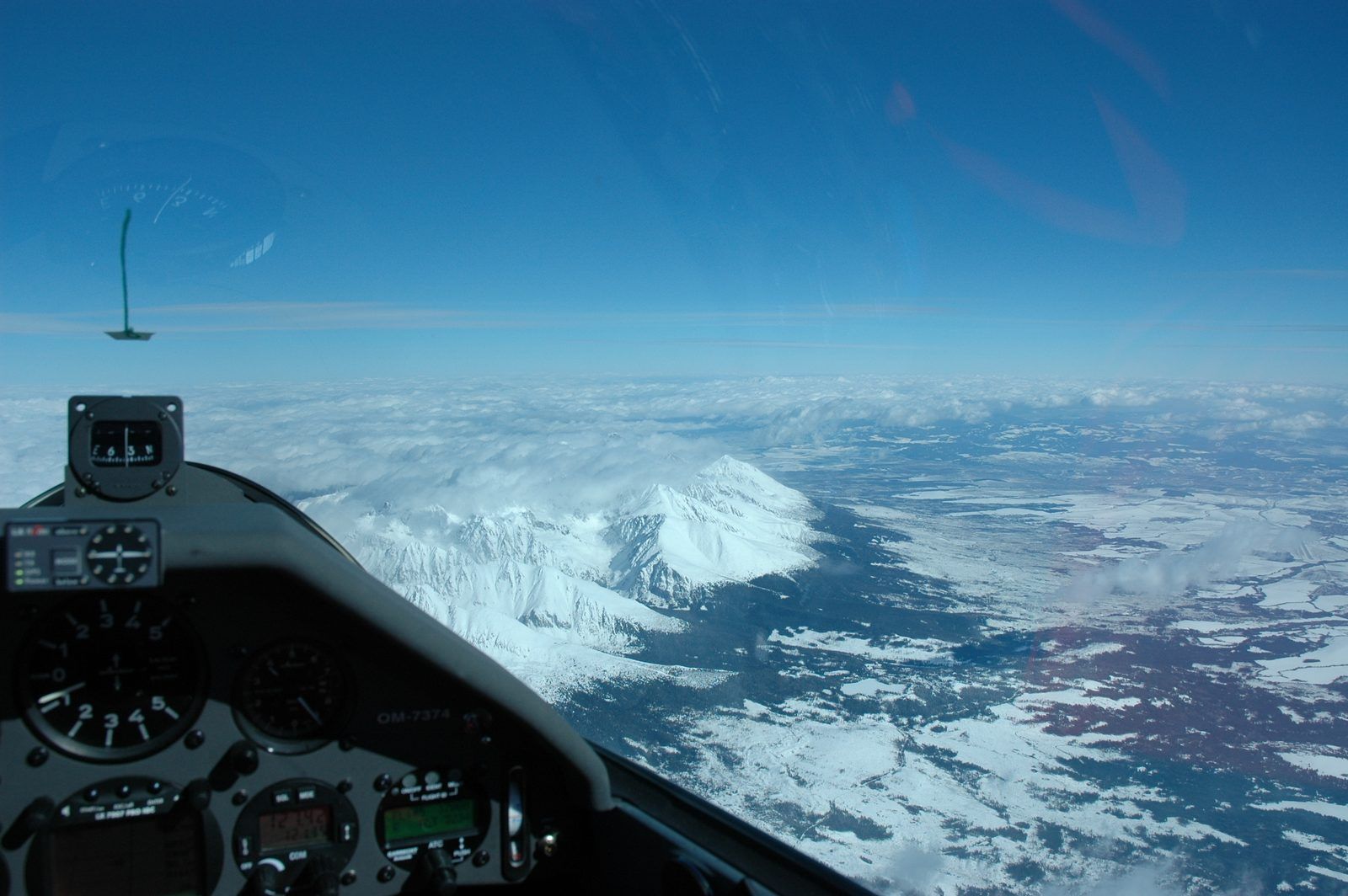
The Tatra wave carries a glider high above the peaks of the Tatras. Flights launch straight from our airfield.

Requirements
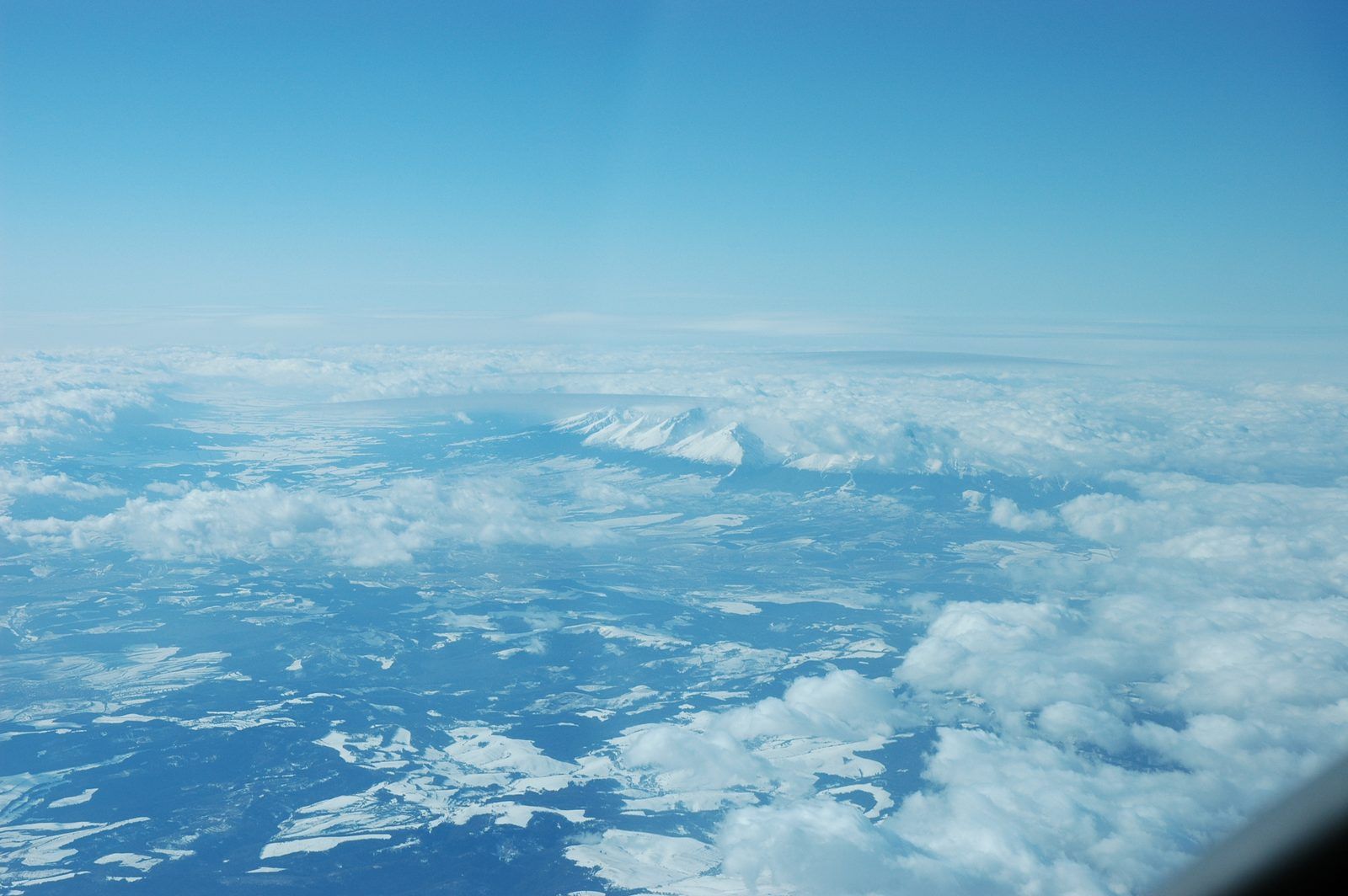
View from a glider cockpit over the snow-covered High Tatras from great height
ALTITUDESaround 8,000 m
CLIMB RATE5 – 15 m/s
WINDNW to N
SEASONautumn – spring

What is the Tatra wave

When a strong wind meets a mountain ridge, the air behind it ripples much like water behind a stone in a stream. The waves stand still and reach heights several times greater than the mountains themselves. On their upwind side the air rises, and a glider rises with it.

The Tatra wave forms in north-westerly to northerly winds blowing across the High Tatras. The strongest lift usually lies along the line Tatranská Lomnica, Starý Smokovec, Vyšné Hágy, Štrbské Pleso. Flights commonly reach around 8,000 metres, and higher still in exceptionally good conditions.

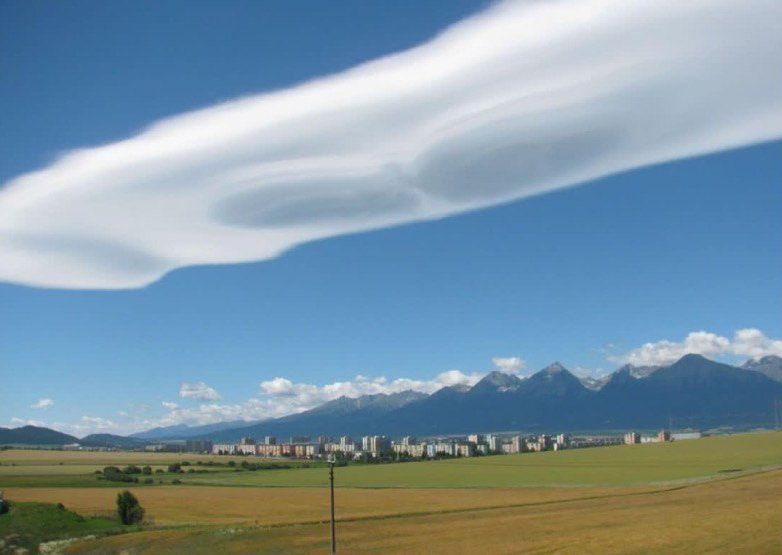
Cloud gives the wave away: lens-shaped clouds that sit motionless in the sky despite the wind, ragged rotor clouds with severe turbulence beneath them, and a föhn wall on the ridge. Wave forms most often in autumn and winter.
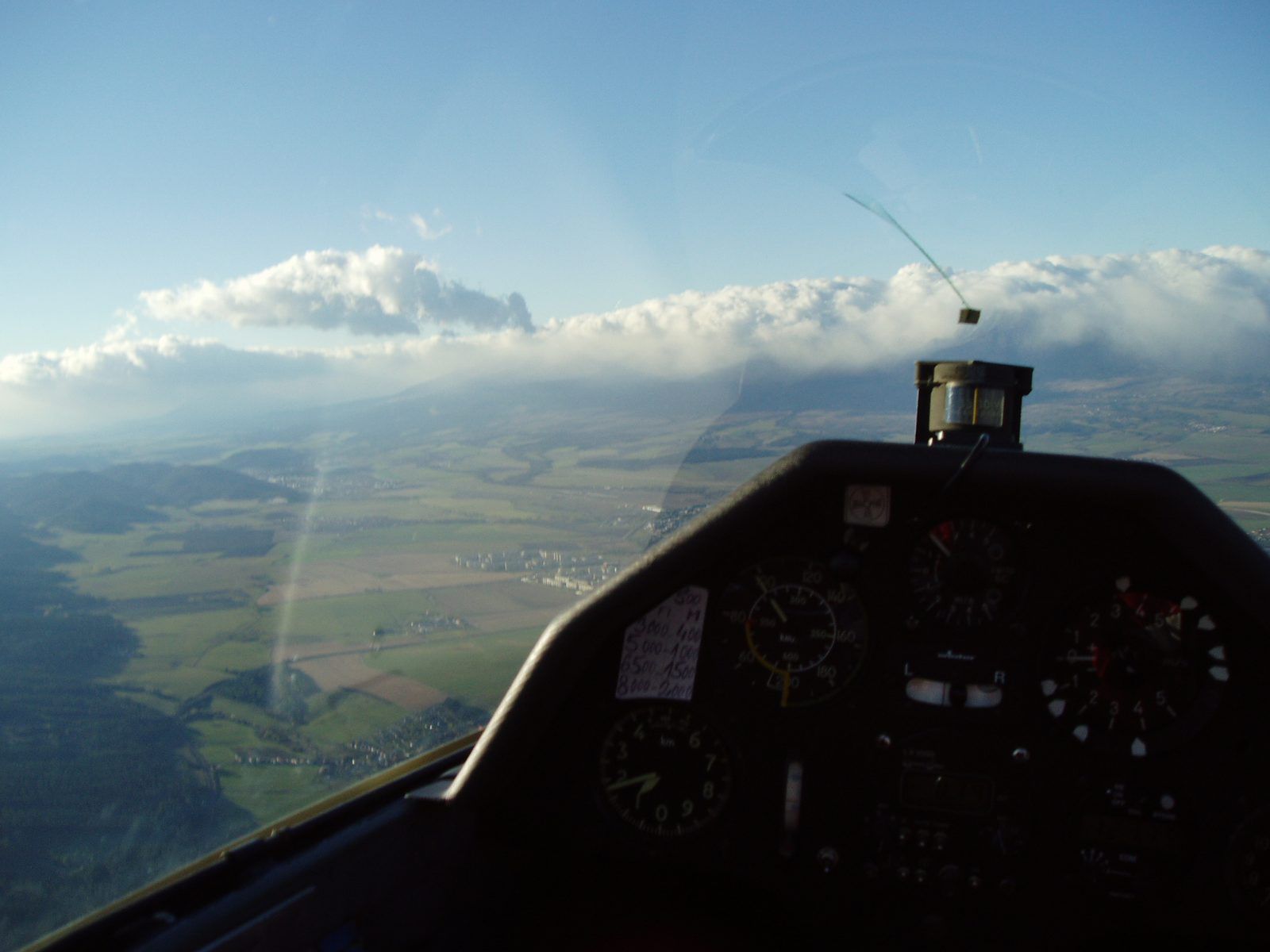
Lenticular cloud above the town of Poprad, with the High Tatras behind Rotor cloud behind the High Tatras seen from above Glider cockpit flying in front of rotor cloud over the Spiš region

Requirements

Wave flights are organised by the Slovak National Aeroclub (SNA) under its wave flying directive. These are the key points.

Pilot

  • A valid glider pilot licence and medical certificate.
  • Ground training for wave flying under the training programme.
  • A training flight with an instructor before the first solo wave flight.
  • An instructor’s logbook endorsement for wave flying.
  • Documented familiarity with the directive.

Glider

  • A backup power source, with all batteries fully charged.
  • A working FLARM and a GPS navigation device.
  • A Mode C or Mode S transponder, switched on throughout the flight.
  • Above FL135, oxygen equipment for every crew member and a backup radio with its own power supply.
  • Above FL245, a secondary emergency oxygen system.
  • Radios able to monitor two frequencies at once.

Airspace

  • Flights are made under VFR. Flying in cloud is prohibited.
  • In controlled airspace, wave may be used up to FL195 once a flight plan has been filed.
  • Higher flights are possible only in the dedicated wave areas Vlna 1 (FL135 to FL245) and Vlna 2 (FL245 to FL305) above Poprad and the Liptov region, and only when they are activated.
  • Every flight is coordinated with the wave operations control post at the airfield.
  • Interactive VFR map of Slovakia by LPS SR ↗

How a flight runs

STEP 01

Preparation

The allocation of the wave areas, oxygen pressure, battery charge and both radios are checked.

STEP 02

Aerotow

The tug takes the glider from our airfield to the area of lift ahead of the rotor. The glider pilot decides where and how high to release.

STEP 03

Climb

After release the pilot connects with the wave and climbs in smooth air, talking first to Poprad-Tatry tower and then, inside the wave area, to the wave operations controller.

STEP 04

Return

The sinking part of the wave is used to descend. The pilot requests clearance before re-entering controlled airspace and reports the end of the flight after landing.

Safety at altitude

Oxygen and hypoxia
Lack of oxygen is the greatest risk of high-altitude flight. It creeps up unnoticed, often with a sense of well-being, and gradually impairs judgement, vision and coordination. That is why pilots breathe oxygen in the wave area and the controller regularly asks for their position and altitude. If the controller advises a descent, the pilot descends.
Weather
Cloud changes through the day. The pilot keeps watching the gap between the föhn wall and the rotor, and descends below cloud at once if it starts to close. If icing occurs, the pilot leaves the level where it is forming.
Alternate airfield
For flights from our airfield the alternate is Poprad-Tatry. The release height must always allow a safe glide home.

Want to fly the wave?

Get in touch with our Head of Flight Operations, Bc. Ján Šabľa. Newcomers start with glider pilot training.

+421 911 103 000 Glider pilot course Membership application